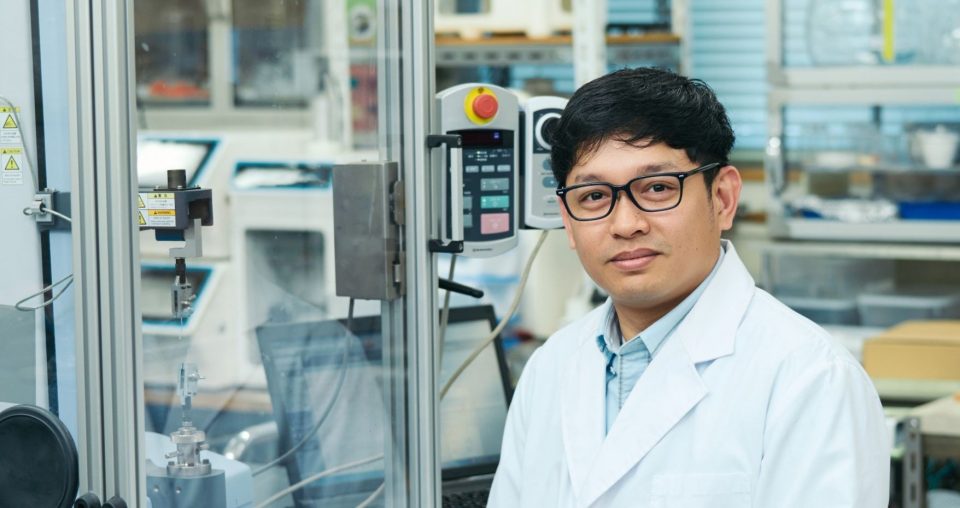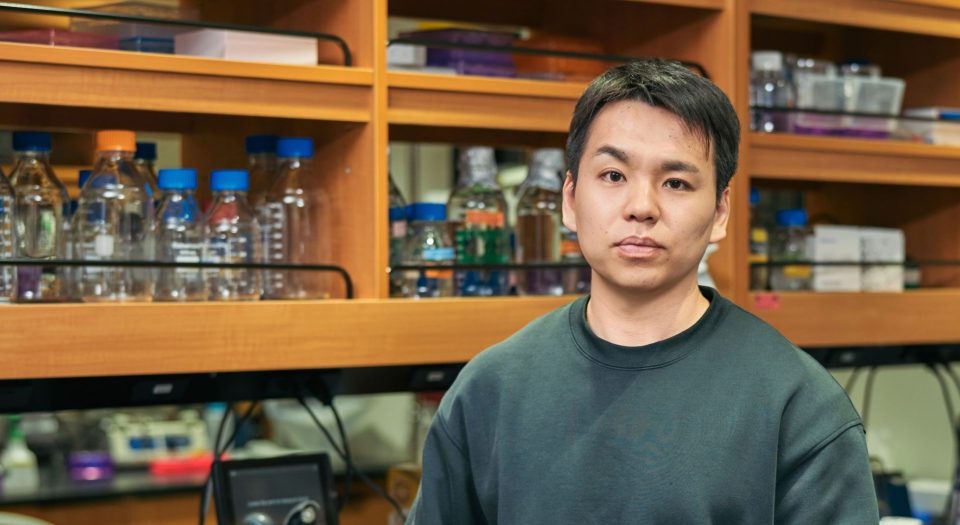



Assistant Professor Azuma, a contemporary artist, aims to establish a model of artistic production in which artists, artisans, and local communities collaboratively create artwork, and to demonstrate its value in society beyond cultural and linguistic boundaries. People who meet him often feel naturally drawn to engage with his projects, and many find themselves wanting to contribute in some way. This quality gradually draws people together, creating a shared momentum and enthusiasm around his work.
The Beginning of My Engagement with the Community
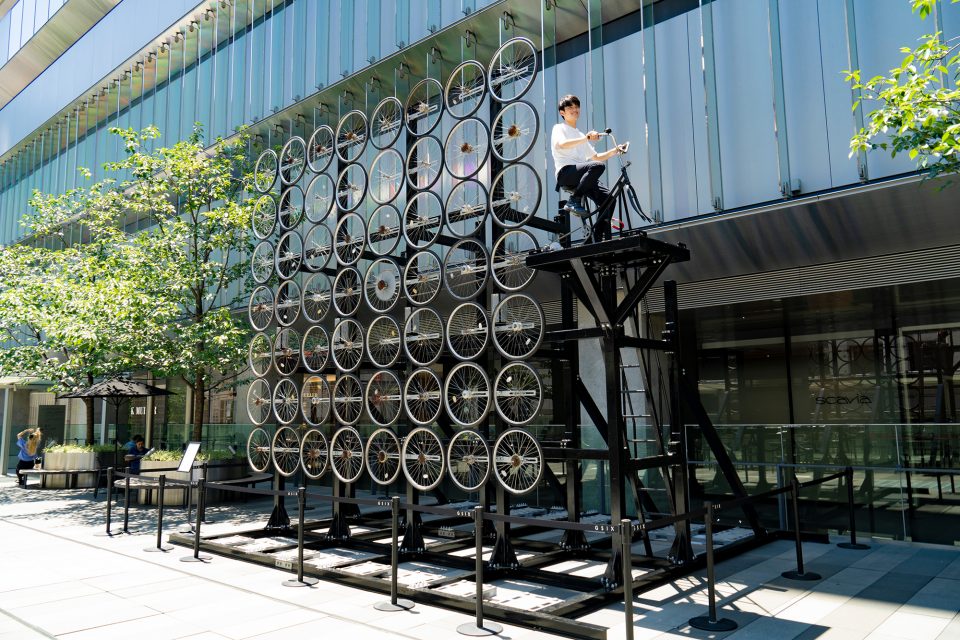
I studied contemporary art at university, but struggled to decide on a theme for my work. In an attempt to find some inspiration, I began walking around the area surrounding my university campus in Toride city, Ibaraki Prefecture. The local people were very kind to me. They told me various stories about the community, including the local bicycle racetrack and town revitalization initiatives using bicycles. When they learned that I was having difficulty finding a subject for my work, they said, “I don’t ride this anymore, so you can have it,” and gave me several bicycles. Before long, word about me spread through the community and more and more bicycles began to arrive. My graduation project was created by combining those bicycles into a single large piece of art.
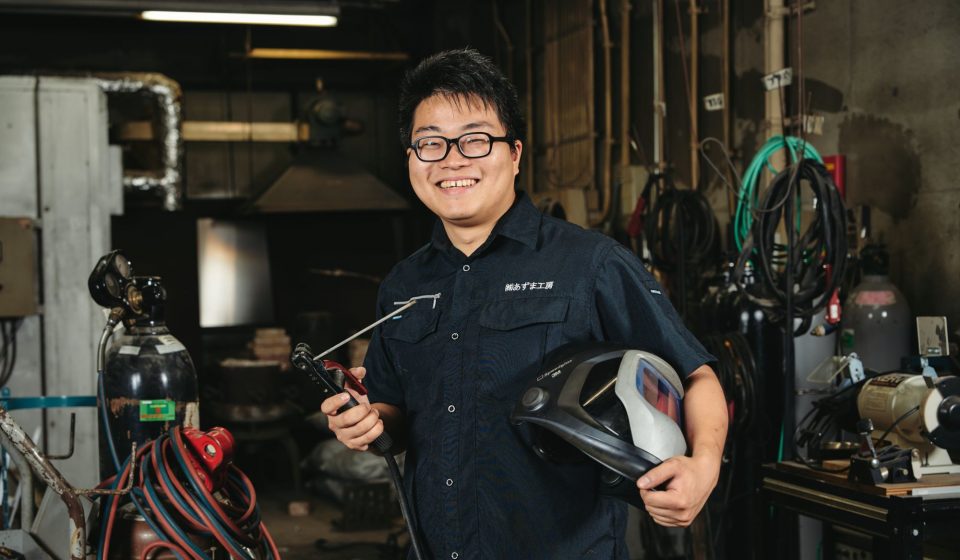
Due to the COVID-19 pandemic, I was unable to continue my production activities and ended up borrowing space for my studio in the workshop of an acquaintance who ran a metalworking factory. Unexpectedly, I was able to learn techniques related to high precision from professional craftsmen. They enjoyed the production process together with me and proposed various ideas along the way. Through this experience, I came to realize the importance of engaging with other people and with the community in the process of creating my work.
Infinity Wheel (2021) (Photographed by AZUMA Koichiro)
The Value of Artwork
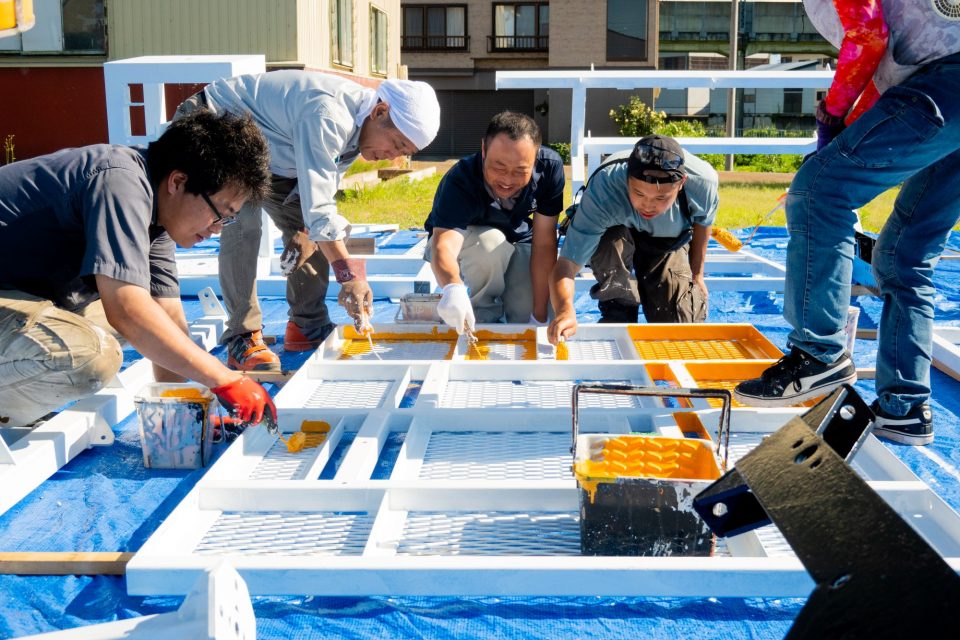
The production process through group work generates many conversations. In projects such as the Omika Art Project in Hitachi city, Ibaraki Prefecture and the Echigo-Tsumari Art Triennale in Tokamachi city and Tsunan town, Niigata Prefecture (photo), this process developed into group work on a community-wide scale. As a result, the artists and local community both stimulated one another and became revitalized. People who had previously had little or no connection with art experienced it for the first time, rediscovered the value within their own everyday lives, and generated not only tangible objects, but also a shared sense of energy.
Artwork inspired by a rotary snowplow, created together with craftsmen from Nanawa. (Photographed by AZUMA Koichiro) https://geidai.repo.nii.ac.jp/records/2000644 Plate 79
The environmental artwork “The Umbrellas” (1991) (reference), created by the artists Christo and Jeanne Claude, involved installing umbrellas across a vast landscape and was held simultaneously in Japan and the United States across the Pacific Ocean (California, USA, and Hitachiota city , Ibaraki Prefecture).
In the dry land of the United States, the foundations were installed by driving stakes into iron frames. However, this method did not work well in Japan’s soft ground. The problem was solved by people in Japan’s construction industry, who used concrete blocks. Since they understood the characteristics of the local environment, they were able to arrive at a solution through communication. In the same way, I seek out networks of local craftsmen and incorporate these elements into my work. By making use of regional resources, I believe that this artwork can gain value as a “work of the community.”
Challenges Overseas
I am currently working on a project commissioned by the City of Miami to install a public artwork approximately eight meters tall in Flamingo Park, located in Miami Beach, Florida. It is a major challenge to see whether the model of artistic production I have developed will be accepted overseas and lead to the creation of a meaningful work of art.
The park covers 36.5 acres and is a popular place where local residents come to relax and spend time. Citizens expressed a desire for a symbol of a flamingo, a motif connected with the park’s name, and their voices moved the city council to initiate the project. I am currently advancing the production while collaborating with various communities in the area.
Miami also hosts the well-known art fair Art Basel in Miami Beach every year. In an environment where people’s attention often focuses on high priced artworks, it is a real challenge to see whether my bottom-up model of artistic production will make an impact in the art world. If artists can be recognized not only as creators of the object called art, but also as figures who connect people with one another, the creation of public art may bring positive change to local communities. With this aspiration in mind, I aim to implement a model of art production in society that is based on co-creation.
(Date of interview: January 29, 2026)