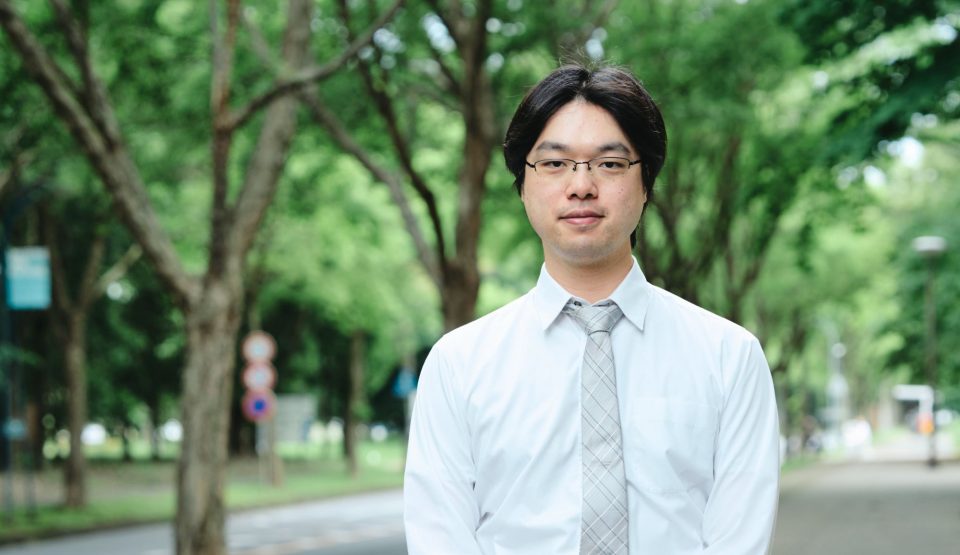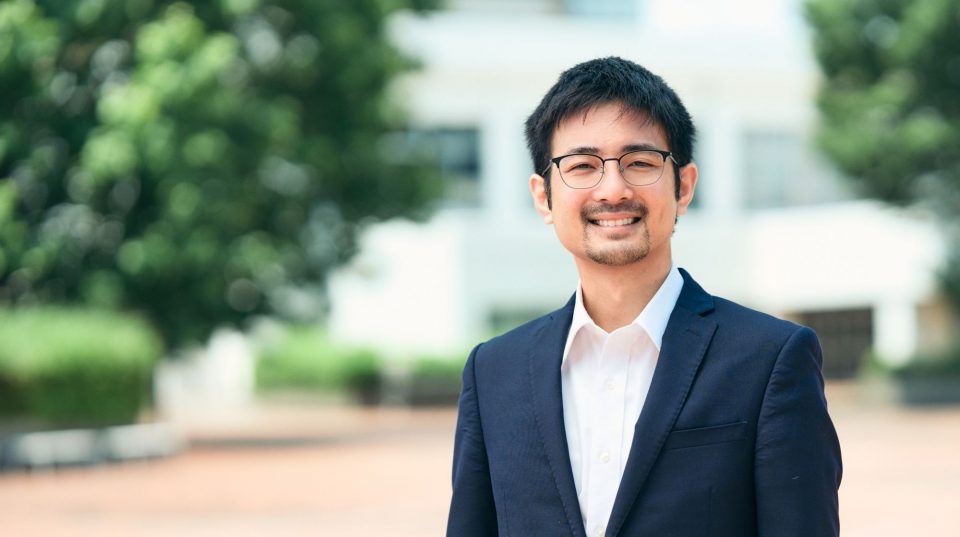



OCHIAI Yoichi, widely recognized as a media artist, builds his work on science grounded in the concept of “Digital Nature” in which computers are ubiquitous and reshape the world around us (*1)(*2). As societal change accelerates, he envisions pathways for us to lead richer and more fulfilling lives.
What is Digital Nature?
In simple terms, “Digital Nature” represents “a new view of nature”. It is a way of understanding computers not merely as human tools, but as part of a new natural environment, an approach that dissolves the boundary between the “physical world” and the “informational world”. In my laboratory, based on this concept, we investigate what is needed for humanity to live fulfilling and enriched lives within Digital Nature in the years to come.
We are already living within digital nature. A study in 2018 (*3) estimated global biomass by converting it into carbon weight and found that plants accounted for approximately 90%, whereas humans represented less than 1%. However, a reversal occurred around 2020 (*4), with the total mass of human-made artifacts surpassing that of biomass, which had until then been heavier. Today, most artificial objects are embedded with computers. While this represents one aspect of the emergence of digital nature, in material terms, we are already living in digital nature.

Although we perceive the rural landscape (Photo), itself a product of human-made environmental modifications, to be “rich in nature”, we have not yet been able to view digital society in the same manner. In response, I am working to redefine our view of nature under the idea of “living within a new form of nature that emerged after the advent of computers”. By continuously examining the foundational technologies and cultural dimensions embedded within this new environment, I seek to clarify what digital nature truly is.
Figure 1. In the era of Digital Nature, society shifts from one in which humans collaborate with machines to make things, to one in which machines equipped with artificial intelligence (AI) autonomously implement designs within the digital nature and humans select from the outcomes provided. (Created by OCHIAI Yoichi)
The Beginning of My Research into the Fusion of Virtual and Physical Spaces
My research into the fusion of virtual and physical spaces began during my doctoral study. At that time, I was working on acoustic levitation. Underlying this was a desire to create something that is both imagery and matter. Acoustic levitation uses ultrasonic waves to suspend particles and manipulate them through computer control, essentially merging a computer-generated virtual space with the physical space. This technology makes it possible to create a “three-dimensional display” that exists simultaneously as an image and as a physical substance.
Alongside the publication of studies on acoustic levitation, I developed an interaction technology called “Pixie Dust”, which uses ultrasound waves to draw patterns in mid-air. In 2014, it was accepted at SIGGRAPH, an international conference, and received numerous awards. When I later established my laboratory in 2015, I began formulating a research theme that abstracted the idea of creating entities that are both imagery and matter. That line of thinking eventually led me to the concept of Digital Nature. I summarized these ideas in my book The Age of Magic (*1), which discusses the arrival of the era in which information seeps from imagery into reality, an age of Digital Nature and the remagicalization of the world.
Approaching Digital Nature Through Both Thought and Technology
I believe my uniquely hybrid career lies in pursuing Digital Nature from both philosophical inquiry and artistic esthetics. I have continued to produce art while simultaneously conducting research and developing technologies.
In my research, I have investigated the cooperative relationship between artificial intelligence (AI) and machine intelligence, as well as interactions with large language models. I have also worked on generative AI since around 2015, and “generative AI” was selected in 2023 as a Buzzword of the Year in Japan, an experience that deepened my sense of how research intersects with society.
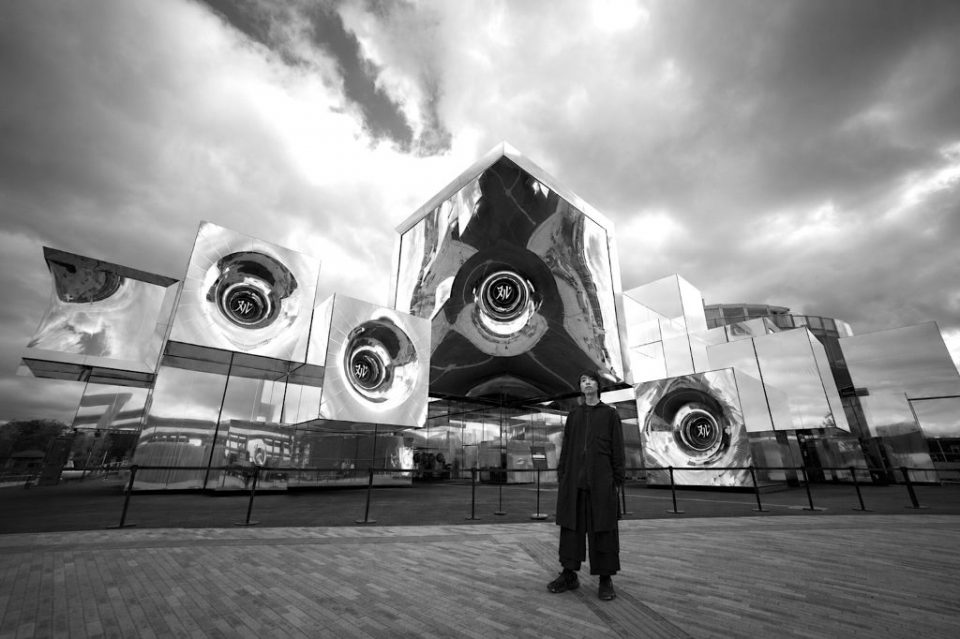
One of my recent large-scale works is the signature pavilion “null2 (Nurunuru)” for Expo 2025 Osaka, Kansai. It is an interactive, living architectural structure designed to let visitors experience digital nature by blending the physical and digital realms (Figure 2).
Figure 2: Interior and exterior views of the null2 Pavilion (Provided by OCHIAI Yoichi)
In recent years, I have been approaching Digital Nature from both philosophical and technological perspectives. Among these, a major theme is how to create a high-speed, automatic cycle in which simulations occurring in a computer’s internal virtual space and phenomena unfolding in the physical world merge seamlessly (Figure 3).
Figure 3. (Created by OCHIAI Yoichi)
A university is a place that allows for deep, long-term thinking rather than short-sighted pursuits. As digital nature arrives and the boundary between humans and artificial machines dissolves, I hope to examine, patiently and in the long term, what types of inventions humanity will create and how people will grow in such an era.
(*1) OCHIAI Yoichi. The Age of Magic. Tokyo: Planetary Development Committee / PLANETS, November 2015. ISBN 978-4-905325-05-5.
(*2) OCHIAI Yoichi. Digital Nature: Wabi and Sabi in the Pantheistic Ecology Formed by Computational Media. Tokyo: Planetary Development Committee / PLANETS, June 15, 2018. ISBN 978-4-905325-09-3 (ISBN-10: 4905325099).
(*3) Bar-On, Y. M., Phillips, R., & Milo, R. (2018). The biomass distribution on Earth: A census of the biosphere. Proceedings of the National Academy of Sciences of the United States of America, 115(25), 6506-6511. DOI:10.1073/pnas.1711842115.
(*4) Elhacham, E., Ben-Uri, L., Grozovski, J., Bar-On, Y. M., & Milo, R. (2020). Global human-made mass exceeds all living biomass. Nature, 588(7838), 442–444. https://doi.org/10.1038/s41586-020-3010-5
(Date of interview: August 26, 2025)